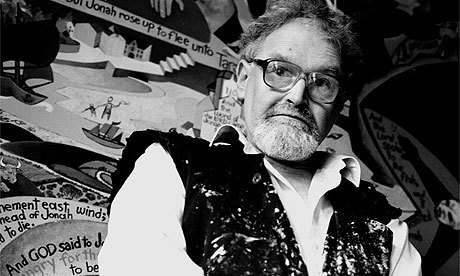
John Archer on the future of the BBC committee panel

John Archer was invited to discuss BBC Scotland and the independent sector in Scotland at the Culture, Media and Sport committee yesterday, Tuesday 24th June. The inquiry is looking at evidence regarding the future of the BBC. 

Also included on the panel were Ian Jones, S4C in Wales and Richard Williams of Northern Ireland Screen.

John started off discussion with commending the cultural impact of the BBC in Scotland, and pointing out room for improvement. 

We made a programme about the history of drama and productions in Scotland since television started 60 years ago. And in the 70s and 80s, particularly, there were distinctive network productions from Scotland, which told Scottish stories with writers like Peter McDougall. I think recently that’s weakened by importing drama production to Scotland possibly in order to meet quotas, which is an admirable aim, but it’s not making the most of what can be grown within Scotland.
— http://www.bbc.co.uk/democracylive/house-of-commons-27996813

You can watch the full panel discussion here, with the discussion on regions starting at 55 minutes in. 

Win for Iboga Nights

laurel leaf.png

Open City Doc Fest has awarded its Best UK Film award to Iboga Nights, directed by David Graham Scott and produced by Hopscotch Films.

David said via twitter "I put three years of my heart and soul into it." The film relates the experiences of drug addicts trying to kick the habit with use of controversial drug Ibogaine, a process David has been through himself. The jury said: “with its spare yet telling portraits of people with desperate addictions, this compelling film brings the audience close to a very important issue.”

For more on the film check out the website Iboga Nights

Congratulate David on twitter @DGS120

John Archer has a dream

Edinburgh International Film Festival held its inaugural Scottish Film Summit on June 18th. Hopscotch's John Archer was invited to attend. 

The Scottish film sector is facing a period of immense change, challenge and opportunity. The aim of the Summit is to provide a forum for the whole of the industry to come together to discuss the future Scotland’s film industry wants to build.
This is an opportunity to present the current views and concerns of the industry, and to look at how we build the Scottish industry post-Referendum.
— https://www.edfilmfest.org.uk/industry/scottish-film-summit

John was invited to share a vision of the Scottish Film industry in 2024, which got a great response. 

Here is the text in full.

Let me tell you of a dream I had earlier this week. I woke in 2024, in a different Scotland and a very different film landscape. This is how it is in 2024. Film production in Scotland has stabilized after the heady year of 2020 when two different Scottish films won the Cannes Palme D’Or and the Oscar for Best Film. The five leading film companies, all very different, grew out of the great collaboration of 2015, when working as a co-operative, Scottish film companies benefitted from a huge injection of public support from Creative Scotland and Scottish Enterprise. Though controversial at the time, looking back it was just the boost that the industry needed.

 Building on film’s position as being both cultural and industrial, IPS developed a collaborative and co-operative plan that was known variously as film’s Common Weal, and by the tag IPSo Facto – the very fact of it existing meant that it did good for all. The pooling of resources meant that any company of scale was able to draw upon legal, business and creative development support while freeing producers to do what they should be doing – produce. And the companies involved – ranging from low budget to high, fiction to documentary and animation – benefitted from their joint knowledge, drawing on each others experience and expertise.

 Of course the timing was perfect. The ERDF fund for Scottish Film from 2015 provided a huge extra resource for production funding. Following Scotland’s decision for extra tax breaks for production in Scotland, combined with the attraction of new EIS funds, Scotland could draw on unprecedented production capital. This was a virtuous circle with the new studio providing the production space and an appetite for a throughput of new projects. Joining Eurimages in 2016 provided a shot in the arm for co-productions, as producers forged links all over Europe.

 The locally produced Braveheart 2, set in the immediate future rather than the past, imagined a new vision for Scotland and gave its name to the new distribution model – with films being released in cinemas and on home screens via the Braveheart network. The buzz and excitement around new Scottish productions on their home turf was matched by a growing international following, with audiences around the world eagerly awaiting the new Scottish film. 

 The pool of writers available to producers had expanded greatly not only through the increased training courses dedicated to script production, but also thanks to the Swinney Charter, which meant that any creative writer living and working in Scotland lived tax free provided that at least 50% of their work was on qualifying Scottish productions – whether books, poetry, television or ,crucially, film.

 Just exactly what is a Scottish Film has developed in many different ways since being defined at the 2014 film summit. But both legally and creatively it is now firmly established and best of all – recognised and loved by audiences all over the world.                                                                            
Iboga Nights at Open City Docs Festival

Director David Graham Scott is following up his success with Detox or Die with an in-depth film on the effects of Ibogaine. We are happy to announce that the film will be shown as part of Open City Docs festival in London on June 19. For more details and tickets see here. Here's a taster view...

David Graham Scott’s 2004 film DETOX OR DIE documented how with a single dose of iboga he quit his drug addiction, inspiring others to go down the same route. The psychedelic plant root hails from Africa where it has been used in religious ceremonies through countless generations. A burgeoning movement in the west has promoted iboga as a quick fix route to painless withdrawal. Now David wants to find out how truly effective iboga is. In a Dutch suburb several addicts embark on the long night of psychedelic detox under the watchful eye of an experienced Iboga practitioner. One client collapses and ends up on life-support, the provider is jailed and David starts to question the safety of iboga treatment. The film culminates with a nerve-wracking iboga session in London where the director himself administers the treatment. How does the filmmaker weigh up the ethics of involving himself so deeply in this controversial detox option and what will be his final resolve on the efficacy of it?

Documenting John Grierson on BBC2

Born the son of a headmaster in Cambusbarron, near Stirling, John Grierson directed one of the first documentaries, Drifters, set up the influential GPO Film Unit making Night Mail, and went on to be the first director of The National Film Board of Canada.

The annual awards for best documentary are made in his name. He set out to make films to change the world, and made not just films, but filmmakers.

Watch the documentary Thursday 22, BBC2 Scotland, 22:00

Iconic Glasgow photographer on BBC2

Famous for his photograph dubbed The Castlemilk Lads in 1963, Oscar Marzaroli took some of the most iconic images of Glasgow. This new documentary explores the life of the photographer and revisits a few of his subjects. Man With A Camera is broadcasting Tuesday 1st April 22:00 BBC2 Scotland. 

Paris had Cartier-Bresson, New York - Diane Arbus and Glasgow - Oscar Marzaroli. Man with a Camera celebrates the life and work of Glasgow's pre-eminent photographer, using some of the 50,000 shots taken over thirty years - a moving portrait of a love affair between a man and his city, and the affection in which he is held today.

Marzaroli's black-and-white photographs have become synonymous with a post-war Scotland in the throes of regeneration. They captured both the aspects of the old, such as the rag-and-bone man in the Gorbals or the cockle gatherers of Barra, and the paraphernalia of the new - cranes, towers and construction at Glasgow's Charing Cross.

As Glasgow's landscape changes once again and the high-rises that Marzaroli documented going up are gradually being razed to the ground, this film celebrates Marzaroli's remarkable photographic legacy.

Find clips here. 

Glottal stops and rolling Rs, a masterclass in the Scottish accent

A wee preview of our upcoming documentary on the Scottish accent on screen. Alex Norton joins an actors' class in London as they prepare to master the Scottish accent. 

Dream Me Up Scotty: The Scottish Accent on Screen broadcasts on Monday 23rd December 9pm. See the BBC website for more details. 

Alex sing yer heart out!

Here's Alex Norton having a wee sing song in the famous Britannia Panopticon. He's following the footsteps of many a Scots actor who started their career in the music halls before making it onto the silver screen. Director John MacLaverty filmed Alex singing 'Cead Mile Failte' during a break from shooting Dream Me Up Scotty: The Scottish Accent on Screen. The documentary will screen on BBC1 Scotland on December 23rd at 9pm so make sure to tune in!

Scotsman preview Alasdair Gray: A Life in Progress

The Kelvingrove has announced its plans to exhibit a retrospective of Alasdair Gray's work, marking the artist's 80th birthday next year.

(Source article)

Meanwhile Brian Fergusson has commended Kevin Cameron's film Life in Progress in the Scotsman...

"If I needed any further convincing about my new-found affection for documentaries, I found it at the CCA in Glasgow when BAFTA hosted a screening of a recently completed documentary about Alasdair Gray.

Kevin Cameron has spent well over a decade with Glasgow’s best-known artist – and has produced a remarkable profile of him at work on some of his best-known murals in the city, as well as tracing his hugely varied career from his days studying at art school.

Many of Gray’s supporters feel he was unfairly maligned after the publication of his “settlers and colonists” essay last December.

The film, A Life in Progress, should help to redress the balance if and when it is released, thanks to the insight it offers into Gray’s entertaining, complex and quirky characteristics, as well as the contributions from the likes of Ian Rankin and Liz Lochhead. It is no exaggeration to say it could completely redefine how Gray is perceived as he prepares to turn 80 next year."

(Source article)